What Is Digital Marketing? A Complete Guide
Understanding what is digital marketing is no longer optional, it's a necessity. This guide walks you through everything from SEO and email campaigns to influencer partnerships, helping you choose the right mix to achieve measurable success.
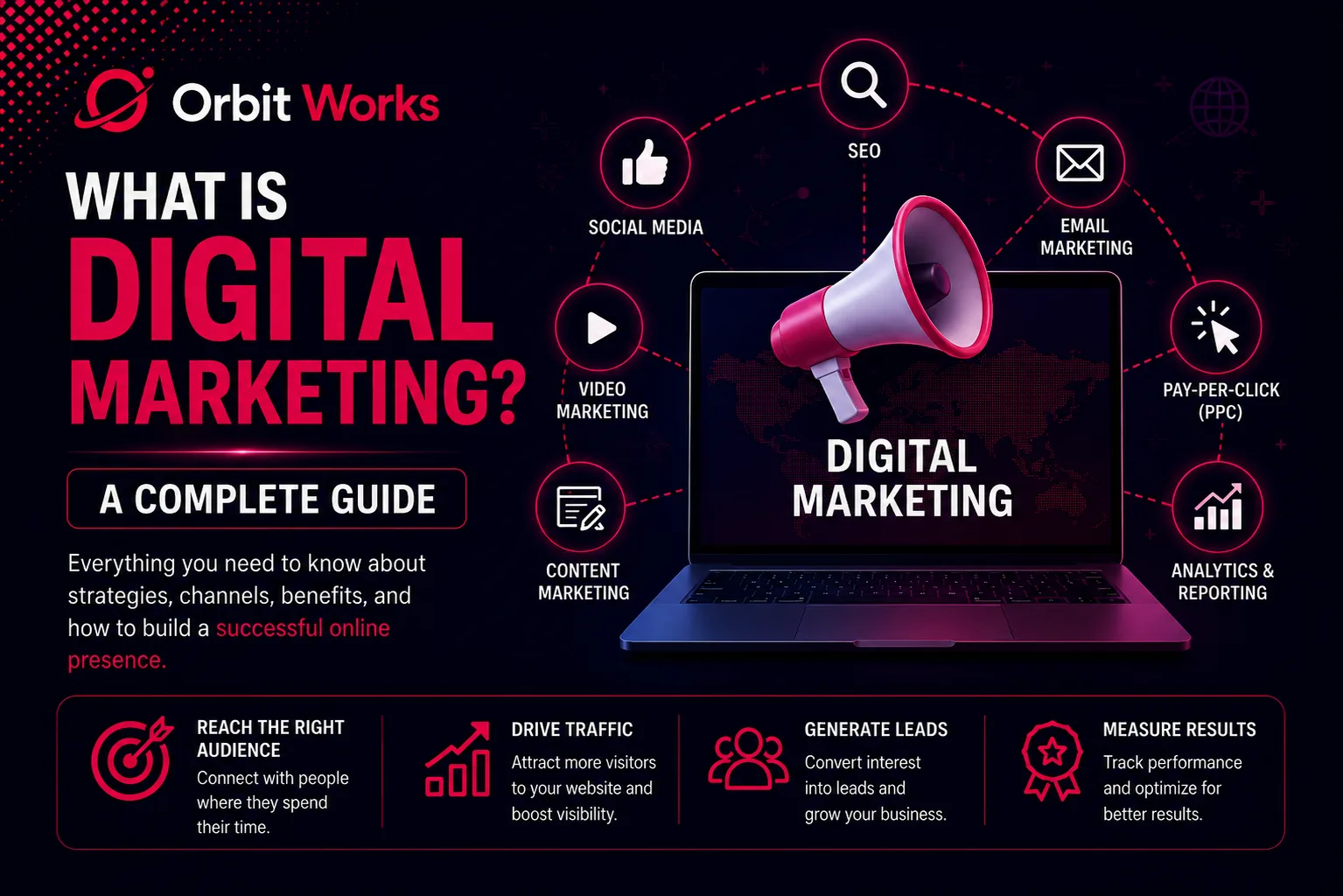
In today's hyper-connected world, what is digital marketing has become one of the most frequently asked questions by business owners, entrepreneurs, and marketing professionals alike. And honestly? It's not hard to see why.
Digital marketing has evolved from a "nice-to-have" into an absolute necessity for any business that wants to survive, let alone thrive. Whether you're running a small local bakery or managing a global enterprise, understanding what digital marketing is and how to leverage it effectively can be the difference between obscurity and exponential growth.
So, let's cut through the jargon and get straight to what matters. In this comprehensive guide, I'll walk you through everything you need to know about what is digital marketing, its core principles, the different types available, and actionable strategies you can implement to achieve real, measurable results.
Here's what we'll cover:
- What exactly is digital marketing?
- The benefits of digital marketing
- Is digital marketing the same as online marketing?
- Types of digital marketing
- How to build a winning strategy
What Is Digital Marketing?
At its heart, what is digital marketing comes down to this: it's the practice of using digital channels and technologies to promote products, services, and brands to connect with potential customers where they spend most of their time, online.
Think about it. When was the last time you went a full day without checking your phone, scrolling through social media, or searching for something on Google? Exactly. That's precisely why digital marketing matters so much today.
Digital marketing encompasses a wide range of tactics and channels, including:
- Search engine optimization (SEO)
- Company websites and landing pages
- Social media platforms
- Email campaigns
- Mobile applications
- SMS and text message marketing
- Online advertising and paid media
But here's something important to understand: what is digital marketing isn't fundamentally different from traditional marketing. The principles remain the same—identifying your target audience, understanding their needs, and delivering relevant messages that resonate. The difference lies in the tools and channels you use to achieve these goals.
How B2B and B2C Digital Marketing Differ
One question I often get when explaining what is digital marketing is whether it works differently for B2B and B2C companies. The short answer? Yes and no.
Business-to-Business (B2B) Digital Marketing:
- Involves multiple decision-makers and longer sales cycles
- Requires a relationship-driven, consultative approach
- Decisions are typically driven by logic, data, and ROI calculations
- Content tends to be more educational and detailed
Business-to-Consumer (B2C) Digital Marketing:
- Features shorter sales cycles with quicker purchasing decisions
- Messaging needs to be urgent, compelling, and emotionally driven
- Appeals to broader audiences with simpler targeting
- Focuses on capturing immediate interest and driving impulse purchases
The beauty of what is digital marketing is its incredible flexibility. Whether you're targeting corporate procurement officers or everyday consumers, digital marketing offers tools and strategies that can be tailored to your specific audience and objectives.
The Advantages of Digital Marketing
Understanding what is digital marketing is one thing, but understanding why it matters is another entirely. Let me break down the key benefits that make digital marketing so powerful for businesses of all sizes.
Expand Your Reach Globally
Traditional marketing is limited by geography. A billboard only reaches people who drive past it. A radio ad only reaches listeners in a specific area. But when you understand what is digital marketing and how to leverage it, your audience becomes global.
Launch an online campaign, and it can be seen by anyone, anywhere, regardless of their location. This means you can effortlessly engage with customers across different time zones and regions, creating a truly global presence without the massive costs associated with international expansion.
Save Costs Without Sacrificing Impact
Let's be real, traditional advertising is expensive. TV commercials, radio spots, and print ads can cost a fortune, and there's no guarantee they'll reach your target audience.
Digital marketing is significantly more budget-friendly. Posting on social media or writing blog content involves little more than your time and creativity. Even paid advertising through platforms like Google Ads or Facebook Ads allows you to set your own budget and only pay when people engage with your content.
When you understand what is digital marketing, you realize it makes sophisticated marketing accessible to businesses of all sizes.
Track Your Success in Real Time
One of the most powerful aspects of what is digital marketing is the ability to measure results in real time.
With traditional marketing, measuring ROI is notoriously difficult. How do you know how many people saw your billboard? Or how many were purchased because of your radio ad?
Digital marketing changes everything. You can monitor conversions, website traffic, lead generation, and other vital metrics instantly. This provides actionable insights that allow you to continuously refine your strategies and drive growth.
Personalize Customer Experiences
Consumer behavior has changed dramatically, and today's customers expect personalized experiences. When you grasp what is digital marketing, you understand that it enables you to deliver exactly that.
Digital campaigns generate valuable data about your audience—their demographics, behaviors, preferences, and pain points. You can use this information to segment your customer base and craft customized communications that resonate more deeply with each group.
The result? Higher engagement, stronger loyalty, and more conversions.
Engage Customers Throughout Their Journey
When you understand what is digital marketing, you see that it's not just about making a sale—it's about building relationships throughout the entire customer journey.
You can interact with potential customers at multiple touchpoints. Run targeted ads to attract new leads. Follow up with personalized messages after a purchase. Send relevant recommendations based on their browsing history. Nurture relationships with valuable content that keeps your brand top-of-mind.
Simplify the Path to Purchase
Thanks to its interconnected channels, what is digital marketing means making it as easy as possible for customers to buy from you.
Customers can seamlessly transition from a social media post to your online store and complete a transaction with just a few clicks. No friction, no barriers—just a smooth, convenient experience that encourages conversions.
Align with Your Business Objectives
A cohesive digital marketing strategy ensures your efforts support your broader business goals, whether that's increasing revenue, boosting brand awareness, or enhancing customer loyalty.
With data-driven insights, you can prioritize the most effective tactics, adjust strategies on the fly, and set realistic, measurable targets across different teams.
Is Digital Marketing the Same as Online Marketing?
This is a question I see all the time, and it's worth clearing up.
Not exactly. In fact, what is digital marketing is a broader term that encompasses many different ways to promote products or services using digital tools. Online marketing, or internet marketing, is just one part of digital marketing.
Let me explain:
Digital Marketing includes any marketing done through digital methods, regardless of whether they require internet connectivity. This includes:
- TV and radio ads
- Digital billboards
- Marketing on phones, tablets, and computers
- Internet-based marketing activities
Online or Internet Marketing is a subset of digital marketing that focuses specifically on internet-based activities:
- Email marketing
- Social media marketing
- Search engine optimization (SEO)
- Pay-per-click (PPC) advertising
Essentially, all online marketing is digital marketing, but not all digital marketing is online marketing. While the terms are often used interchangeably in practice, understanding this distinction gives you a more complete picture of what is digital marketing.
12 Types of Digital Marketing
Now that you understand the fundamentals of what is digital marketing, let's explore the various types and how each contributes to a comprehensive strategy.
Owned Media
Owned media refers to any digital property your brand controls. This includes your website, blog, and social media profiles. When you're in control, you determine exactly what message to deliver and how to deliver it.
Content Marketing
Instead of pushing products directly, content marketing seeks to inform and add value for your audience. It positions your brand as a trusted thought leader and reliable source of information.
Common content forms include:
- Blog articles
- E-books and whitepapers
- Newsletters
- How-to guides
- Infographics
- Podcasts
- Short-form videos like YouTube Shorts and TikTok
This approach isn't just cost-effective, it's highly impactful. In 2022, 80% of marketers reported success with their content strategies, fueling a projected industry worth of $107 billion by 2026.
Email Marketing
Email marketing involves reaching your audience directly through carefully crafted messages delivered straight to their inbox.
Common email types include:
- Welcome messages for new subscribers
- Regular newsletters with updates and value
- Post-purchase follow-ups
- Promotional emails for sales and offers
- Transactional emails for confirmations
To maximize email results:
- Personalize with the recipient's name
- Clearly state your call to action
- Always include an unsubscribe option
- Mix transactional and promotional messages
Search Engine Optimization (SEO)
SEO is about fine-tuning your website so it ranks higher on search engines for relevant keywords, an essential part of what is digital marketing for any business.
Key SEO areas include:
On-Page SEO: Optimizing your content for target keywords to answer your audience's top questions and provide genuine value.
Off-Page SEO: Building quality backlinks to boost your site's authority and credibility in the eyes of search engines.
Technical SEO: Improving site speed, image optimization, and metadata for better crawlability and user experience.
Search Engine Marketing (SEM)
SEM involves paid advertisements that appear prominently on search engine results pages (SERPs). These sponsored links show up when users search for specific terms, and advertisers pay each time someone clicks.
Google Ads and Microsoft Ads are the giants in this space. Since 68% of online experiences start with a search, whether organic or paid, promoting your brand here can drive targeted traffic effectively.
Affiliate Marketing
This strategy leverages partnerships with individuals or platforms that promote your products to their audiences. When a follower purchases through an affiliate link, the affiliate earns a commission or fee.
It's a way to tap into already-trusted channels, increasing your reach through reviews, unboxings, or product integrations. When done well, it becomes a powerful component of what is digital marketing.
Pay-Per-Click (PPC) Advertising
With PPC advertising, you pay only when someone clicks on your ad. Platforms like Google Ads, Microsoft Ads, Facebook, YouTube, and Amazon offer powerful options for targeted campaigns.
To succeed with PPC:
- Enhance your ad relevance and quality score
- Focus on pain points your audience cares about
- Optimize your landing pages for conversions
- Be mindful that without careful planning, PPC can get costly fast
Social Media Marketing
Harness the power of social platforms, Facebook, Instagram, YouTube, TikTok, X (formerly Twitter), LinkedIn, and more, to grow your brand organically and through paid promotion.
It's about building authentic relationships by sharing engaging content and responding swiftly to followers.
Tips for social media success:
- Know where your audience hangs out
- Create high-quality, captivating content
- Respond to comments and messages within 24 hours
- Maintain a consistent posting schedule
Influencer Marketing
Partnering with popular content creators allows brands to reach their followers through trusted personalities. Unlike affiliate marketing, this usually involves paying a flat fee for promotion.
With engagement rates soaring, often around 16% on TikTok, this approach is increasingly attractive.
To maximize impact:
- Collaborate with influencers relevant to your industry
- Have clear agreements on compensation and expectations
- Provide guidelines on messaging and tone
Native Advertising
Native ads seamlessly blend into the platform's look and feel, appearing as natural content rather than overt ads. For example, a native ad might look like a regular Facebook post or appear as recommended content on a news site.
Since consumers tend to ignore obvious ads, native advertising offers a subtler approach, though transparency (like labels "sponsored" or "promoted") remains essential for trust.
Marketing Automation
Streamlining repetitive tasks through automation, AI, and machine learning helps you:
- Automate workflows and campaigns
- Track results and calculate ROI
- Free up your team to focus on strategic and creative endeavors
- Use data insights to tailor more personalized campaigns
Understanding what is digital marketing means recognizes how technology can amplify your efforts.
Mobile Marketing
Targeting users on smartphones, tablets, and wearables, mobile marketing involves direct outreach via SMS, push notifications, or app-based messages.
Since mobile devices are always within reach, this channel enables timely, personalized communication, creating a one-on-one connection with your audience.
Video Marketing
Using videos, whether long-form documentaries or short snippets—you can showcase your brand on platforms like YouTube, TikTok, or Instagram.
Remember, YouTube functions as a search engine, so optimizing your videos for search can enhance visibility. With smartphones capable of producing high-quality videos, it's easier than ever to craft compelling visual content for websites, social media, emails, and paid ads.
What Is Digital Marketing All About?
To really understand what is digital marketing, think of it as the bridge that connects your business with modern consumers. It's how you:
- Reach people where they spend their time—online
- Build meaningful relationships with potential customers
- Deliver personalized experiences that drive loyalty
- Measure and optimize your marketing efforts in real time
- Compete effectively in today's digital-first world
Final Thoughts
Digital marketing offers a diverse array of strategies and services to connect with your audience, build brand awareness, and drive sales. From creating valuable content and optimizing your website to leveraging social media, influencer partnerships, and targeted advertising, each approach plays a vital role in a comprehensive digital strategy.
The key is to understand your audience, experiment with different channels, and continuously refine your tactics. If you're unsure where to start, partnering with a professional digital marketing agency can help maximize your results.
By embracing these 12 types of digital marketing, you can stay ahead in today's fast-paced online landscape, transforming prospects into loyal customers and your brand into a digital powerhouse.
Remember, what is digital marketing today will continue to evolve tomorrow. Stay curious, stay adaptable, and never stop learning. Your business's future depends on it.
Frequently Asked Questions About Digital Marketing
What is digital marketing in simple terms?
In simple terms, what is digital marketing means promoting products or services using digital channels like search engines, social media, email, and websites, rather than traditional methods like print ads or billboards.
Why is digital marketing important?
Digital marketing is important because it's where your customers are. It allows you to reach a global audience, target specific demographics, track results in real time, and often costs less than traditional marketing.
How long does it take to see results from digital marketing?
Results vary depending on the strategy. PPC and social media ads can deliver immediate traffic, while SEO and content marketing typically take 3-6 months to show significant results. Understanding what is digital marketing helps you set realistic expectations.
What skills are needed for digital marketing?
Key skills include content creation, SEO knowledge, data analysis, social media management, copywriting, and an understanding of paid advertising platforms.
Do I need a website for digital marketing?
While it's possible to market without a website using social media and other platforms, having a website gives you full control and serves as the hub of your digital presence.