7 Keyword Research Trends to Use Now
The leading keyword research trends shaping 2026 include AI-powered tools, long-tail keyword strategies, user-intent research, and voice search optimization. These approaches transform how marketers discover better keyword ideas and improve organic visibility.
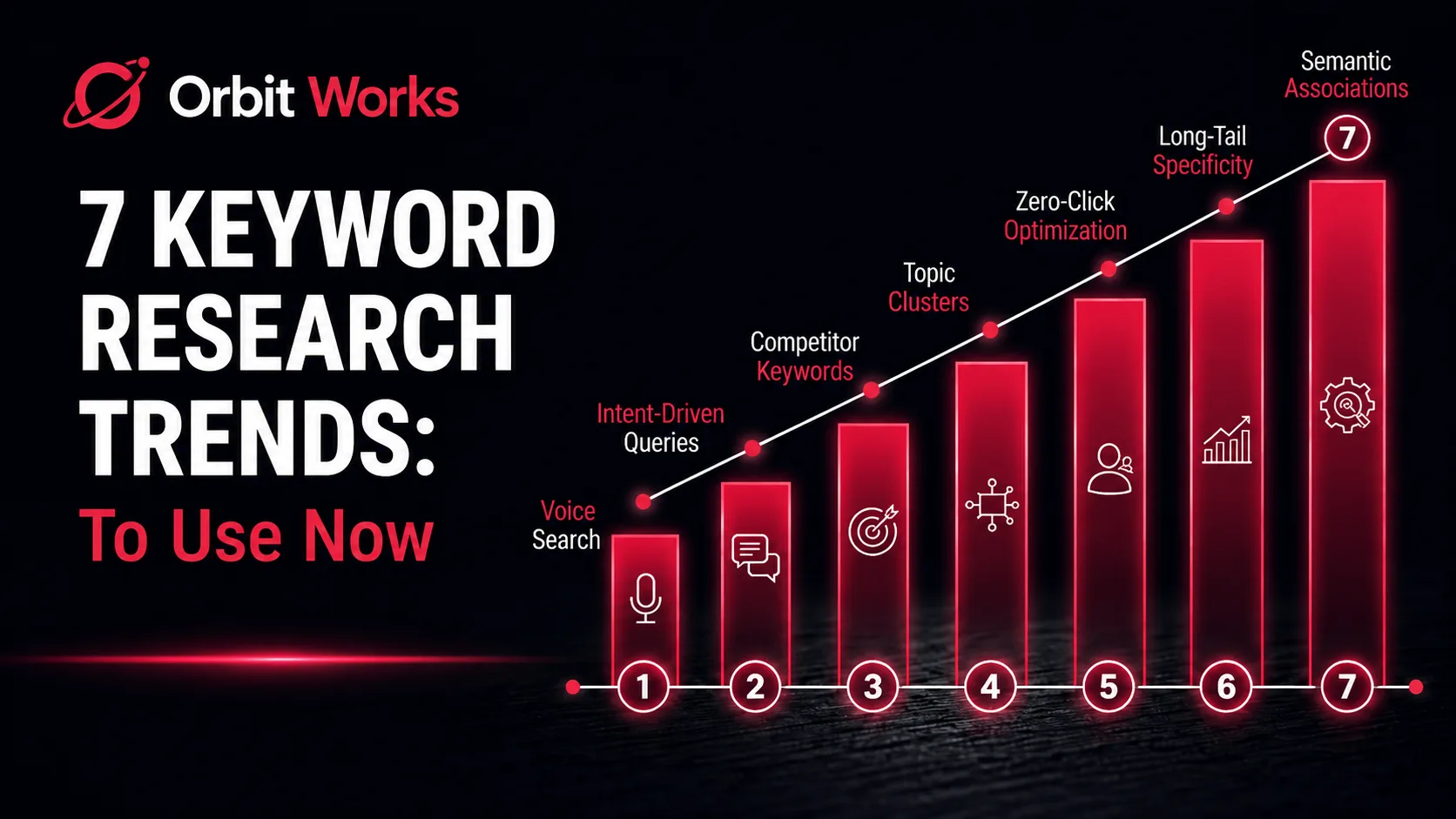
Let's be honest, keyword research isn't what it used to be. The days of simply stuffing a few popular terms into your content and hoping for the best are long gone. Today, the keyword research trends shaping 2026 are smarter, more sophisticated, and honestly, way more effective.
Whether you're a seasoned SEO professional or just getting started, staying on top of these keyword research trends can make or break your content strategy. The good news? You don't need to be a tech wizard to leverage these approaches. Let me walk you through seven game-changing keyword research trends that are transforming how we discover keyword ideas, analyze competitor keywords, and boost visibility in organic search results.
AI-Powered Keyword Research
Artificial intelligence has completely revolutionized how companies handle keyword research. And I'm not just talking about minor improvements, we're seeing a fundamental shift in the keyword research process.
Modern AI keyword research tools and keyword search tools now offer unprecedented sophistication. They work faster, understand context better, and reveal insights that would take humans weeks to uncover manually.
How AI transforms your keyword research process:
Data Analytics: AI scans massive datasets at lightning speed. It uncovers hidden patterns, connections, and valuable insights that human analysts would struggle to find. These insights often reveal valuable organic keywords and fresh keyword ideas that can supercharge your content strategy.
Predictive Analytics: Here's where things get really interesting. AI tools examine historical data to predict upcoming search behaviors. This means you can adjust your content plans and keyword research trends proactively rather than reactively.
Semantic Understanding: Advanced AI algorithms now grasp the true context and subtle meanings behind queries. You can target far more precise high-intent keywords and meaningful long-tail keywords than ever before.
Competitive Analysis Made Easy: Many SEO platforms now automatically spot rival domains connected to your site. They pull out competitor keywords and analyze their keyword positions in organic search results.
Take LowFruits or other keyword reserach tools, for example. This tool helps you locate competing websites through common niche keywords. Simply input your main niche keyword into the Domain Explorer feature, and instantly, a list of ranking competitors appears. You can narrow results using the Signals column to match your exact category, say, eCommerce businesses only.
After adding selected sites to your extraction list, LowFruits gathers top-performing competitor keywords seamlessly. The tool automatically fills the Extract section with these results. From there, you can download a full report of rivals' ranking terms or generate fresh keyword ideas.
This AI-driven method eliminates the tedious task of manually checking competitors. keyword research tools delivers ready competitor lists and simplifies keyword extraction, saving considerable time and effort in the modern keyword research process.
2. Leveraging Long-Tail Keywords
Let me share a secret that many businesses overlook: long-tail keywords are absolute gold. These highly specific phrases face much less competition than their short-tail counterparts.
Long-tail keywords usually contain three or more words. Because of their focused nature, they often drive stronger conversion rates and attract high-intent keywords that users are more likely to act on.
I know high-volume keywords look tempting. But honestly, chasing them is generally a poor choice for small businesses. These high-search-volume terms are incredibly challenging to rank for effectively in organic search results.
Instead, prioritizing long-tail keywords offers a smarter path. This focus increases your chances of securing stronger keyword positions on search engine results pages and capturing valuable organic keywords.
Finding Low-Competition Long-Tail Options:
Discovering low-competition long-tail options is straightforward with modern keyword search tools. Here's how:
Start by choosing the pre-analysis filter located in the top menu of your KWFinder report. Next, open the Words filter section. Set the minimum value to 3, then apply the change. Your updated report will now display only long-tail keywords with three or more words.
Apply these targeted keywords to strengthen your content strategy. This approach boosts the potential for achieving high rankings and stronger organic click-through rates in search results.
User-Intent Research
Beyond just spotting keywords, grasping search intent remains essential for building strong, effective content.
Search intent refers to the core reason someone types a query into Google. It drives their entire search behavior and plays a critical role in modern keyword research trends.
In 2026, mastering search intent stands out as one of Google's top ranking signals. It forms a vital part of the keyword research process this year.
When you truly understand what users want, you can shape content that perfectly matches their expectations and strengthens your overall content strategy.
Key Factors in User-Intent Keyword Research:
Consider who your target audience is. Knowing their age, interests, and challenges helps pinpoint the exact keyword ideas they tend to use.
Clarify their goals. Figure out what people aim to accomplish with each search. Are they seeking quick facts, ready to buy something, or hunting for a service?
Uncover their specific questions. Spot the common doubts or problems users express, and build content that solves them directly.
Modern keyword search tools simplify revealing intent behind keywords. In LowFruits, you can simply apply a filter by selecting the pre-analysis intent option. Once applied, the tool updates the list and displays only keywords matching the chosen intent type.
A clear grasp of user intent allows you to develop a content strategy that supports your overall business objectives.
Real-World Example:
Take an e-commerce site. It can boost organic click-through rates and conversions by targeting high-intent keywords. These terms signal strong buying readiness, so users are prepared to purchase right away.
Similarly, the same eCommerce brand can strengthen its blog efforts by filtering for Comparison keywords. This category highlights informational intent, which fits the natural role of blog articles. Writers then use those keywords to craft detailed comparison guides. In doing so, they position the company's product as the best choice while improving performance in organic search results.
Keyword Clustering
Keyword clustering serves as a smart method for building an effective keyword research process in your content strategy.
It brings together similar keywords into focused groups. This allows you to target multiple related organic keywords within just one article. Consequently, this approach delivers greater visibility across organic search results for phrases connected to your main keyword.
Moreover, keyword clustering helps you cover the entire topic more thoroughly and naturally.
However, keyword clustering does come with a challenge. Performing it manually demands considerable time and effort.
In the past, before dedicated tools appeared, people handled everything in spreadsheets. They sorted keywords carefully, placed them into separate tabs, and repeated the steps for every new topic.
Even today, many SEO experts prefer this detailed manual method because it offers deep accuracy. Yet for small business owners, it often feels too slow and overwhelming.
Fortunately, modern keyword search tools simplify the entire process significantly.
LowFruits handles keyword clustering automatically on your behalf. Inside the KWFinder tool, you simply switch to the Clusters tab. There, you will immediately notice how keyword research tool has neatly organized similar keywords into clear groups.
Furthermore, you can click any cluster to explore the specific keyword ideas it contains. For instance, one cluster might focus entirely on keywords linked to "Los Angeles best florist."
Keyword research techniques like clustering prove highly efficient. They guarantee strong visibility in organic search results for your primary keyword, along with its close variations.
Voice Search Optimization
Voice Search Optimization has become an important part of modern keyword research trends.
The growing popularity of voice assistants, such as Siri and Google Assistant, has transformed how individuals look for information. Compared to classic text searches, voice queries tend to sound more natural. They are usually longer and resemble conversational long-tail keywords.
Making Your Content Voice Search Ready:
First, adopt natural language throughout your writing. Use everyday spoken phrases and full sentences that reflect real speech patterns.
Next, directly address common questions. Build sections that provide clear answers to typical queries in your field.
Additionally, prioritize local optimization when relevant. If your business serves a specific area, include location-based phrases that people speak aloud.
Moreover, keep voice-activated devices in mind. Consider the short, spoken commands users rely on to find your information.
By applying these approaches consistently, your content stands a better chance of ranking in voice-driven organic search results.
Competitive Intelligence
Competitive intelligence plays a vital role in modern keyword research trends.
It helps identify competitor keywords, analyze their keyword positions, and discover valuable opportunities to improve your own content strategy.
Researching competitors' keywords delivers powerful insights that guide smarter decisions.
Critical Areas to Monitor:
First, keyword usage stands out. Track how competitors apply keywords and identify high-performing organic keywords.
Next, search engine rankings matter greatly. Keep an eye on competitors' keyword positions for important search queries.
Finally, analyze their content strategy by reviewing the topics they cover and the types of content they publish.
Tool makes gathering these competitor insights straightforward. It lets you dive deep into rivals' competitor keywords and uncover patterns in their rankings.
Position Tracking
Position tracking remains a classic and essential trend in modern keyword research.
This approach focuses on selecting and monitoring the most valuable organic keywords for your website. By tracking their keyword positions in search engine results pages, you gain clear insight into your SEO performance.
Moreover, it highlights opportunities to improve rankings and increase visibility in organic search results.
Getting Started with Keyword Tracking:
Getting started with keyword tracking is quick and straightforward using the tool Rank Tracker. Simply input the keywords you wish to follow into the Tracker tool. The Rank Tracker immediately captures your current keyword positions and monitors changes over time.
Top-tier rank tracking tools simplify the process of analyzing your organic keywords and performance metrics.
Conclusion
The world of keyword research trends continues to evolve rapidly. Businesses that stay updated with these changes gain a strong advantage in digital marketing.
By applying these modern keyword research trends, you can discover better keyword ideas, improve your keyword research process, and develop a stronger content strategy. Focusing on long-tail keywords, search intent, keyword clustering, and Voice Search Optimization helps improve visibility in organic search results.
Additionally, analyzing competitor keywords, tracking keyword positions, and using advanced AI keyword research tools allows businesses to uncover valuable organic keywords and increase organic click-through rates.
Together, these improvements strengthen your overall SEO strategy and position your website for long-term success.
To strengthen your SEO strategy even further, it's also helpful to organize your keywords into structured content systems. For example, using a Topic Cluster strategy allows you to group related articles around a central pillar topic, improving both search visibility and site authority.
What's Your Next Step?
Pick one of these keyword research trends and implement it this week. Start with AI-powered keyword research or focus on long-tail keywords, whichever feels most manageable. The key is taking action and consistently refining your approach as these keyword research trends continue to evolve.
Frequently Asked Questions (FAQs)
1. What are the most important keyword research trends for 2026?
The top keyword research trends for 2026 include AI‑powered keyword research, long‑tail keyword optimization, user‑intent research, keyword clustering, voice search optimization, competitive intelligence, and position tracking. Each trend helps you uncover better keyword ideas and improve your overall SEO performance.
2. How does AI improve the keyword research process?
AI accelerates the keyword research process by scanning massive datasets, uncovering hidden patterns, predicting future search behavior, and understanding semantic context. It also automates competitor analysis, saving you hours of manual work while revealing valuable organic keywords you might otherwise miss.
3. Why are long‑tail keywords better than short‑tail keywords?
Long‑tail keywords are more specific, have lower competition, and attract high‑intent keywords, meaning users are closer to making a purchase or taking action. They may have lower search volume, but they deliver stronger conversion rates and are easier to rank for in organic search results.
4. How can I optimize my content for voice search?
To optimize for voice search, write in natural, conversational language, directly answer common questions, include location‑based phrases for local businesses, and think about the short spoken commands people use with voice assistants. These tactics align your content with modern keyword research trends focused on voice.
5. What is keyword clustering and why does it matter?
Keyword clustering groups similar keywords together so you can target multiple related organic keywords in one article. This improves topical coverage, boosts visibility for variations of your main keyword, and makes your content more comprehensive, all without creating separate pages for each term.
6. How often should I track my keyword positions?
It's wise to track your keyword positions regularly, weekly or bi‑weekly is a good cadence. Consistent position tracking helps you spot trends, measure the impact of your content updates, and adjust your strategy based on real performance data, which is a core part of staying ahead with keyword research trends.