Why Your 12-Attorney Firm Is Losing Signed Cases Before the First Call Back
This guide walks through the minimum viable intake automation chain: form capture, conflict-check trigger, engagement-letter generation, e-signature, and trust-account payment link—and shows where attorney review must stay firmly in the loop.
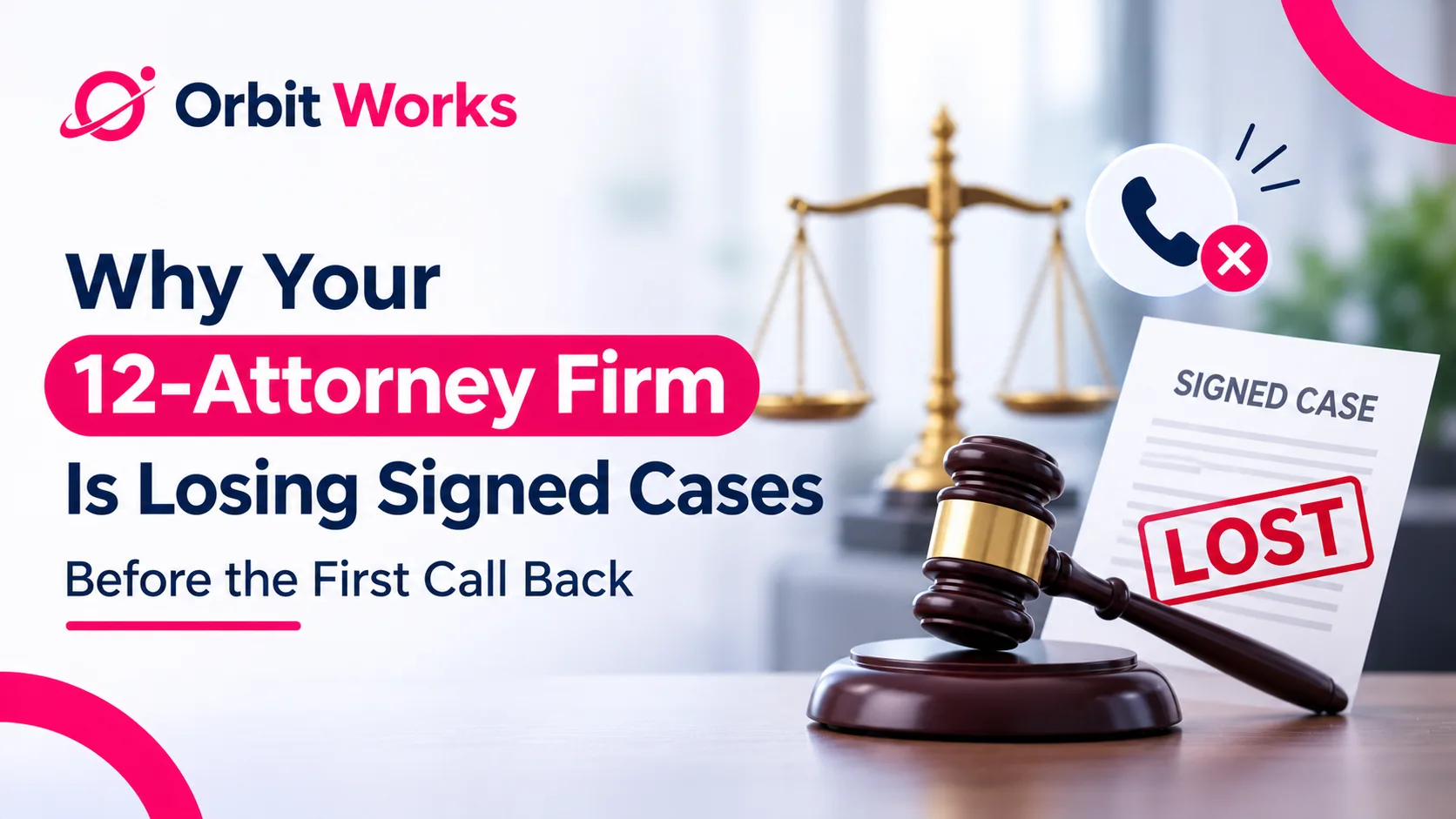
Your firm does not lose cases because another attorney is better. It loses them because another firm answered first. A prospective client who fills out your web form at 10:14 a.m. is not waiting patiently for a callback after your 2 p.m. deposition. They are contacting three firms, and the first one to have a real conversation usually wins.
The data on this is unforgiving. Firms that respond to a new inquiry within five minutes are 21 times more likely to convert that lead than firms that respond after thirty minutes, a finding cited in Clio’s Legal Trends Report and consistent across lead response research. A Harvard Business Review study found that businesses responding within five minutes were 100 times more likely to connect with a lead than those waiting thirty minutes. The five-minute window is not a marketing slogan. It is a measurable advantage that most small firms are structurally unable to capture with a shared inbox and good intentions.
The hidden cost is not the missed call. It is the signed engagement letter that went to the firm two miles away, a firm with the same practice area, the same credentials, and a faster callback.
Speed-to-lead is not a staffing problem. It is a workflow problem.
When a managing partner discovers that inquiries are sitting unanswered for hours, the instinct is to blame the person handling intake or to conclude that the firm needs a dedicated intake coordinator. Sometimes a coordinator is the right answer. But the more common diagnosis is that the intake workflow has no connective tissue.
The form lands in a shared inbox. Someone prints it, manually checks conflicts, drafts an engagement letter in Word, emails it for signature, waits for the signed copy, and separately sends a payment link. Every handoff is a place to drop the ball, and none of it generates revenue. A prospective client can be lost at any one of five steps, and the firm never knows which step failed.
The firms that convert at high rates do not necessarily have more staff. They have a workflow where the handoffs happen automatically, and the attorney’s time is reserved for the part that requires legal judgment: reviewing the conflict result, approving the engagement terms, and making the call.
The minimum viable intake chain
Intake automation does not require replacing your practice management system or rebuilding your website. The minimum viable chain connects five components you likely already have, or can add without enterprise cost.
1. Form capture that routes, not just collects
The starting point is a web form that captures structured data: name, contact information, practice area, a short description of the matter, and how the prospect found the firm. The critical difference from a standard contact form is routing. When the form is submitted, the data should land in a system that can trigger the next step—not an email inbox where it waits for a human to notice it.
Intake software designed for law firms typically includes AI-guided intake and structured screening, reducing manual follow-up while responding consistently around the clock. The form is the front door. If it does not trigger a downstream action, everything after it stays manual.
2. Conflict-check trigger with a human decision point
A structured intake workflow should initiate the conflict-check sequence automatically against the firm’s client and matter database. The automation does not need to clear conflicts on its own. It needs to surface potential conflicts immediately and route the result to the appropriate attorney for review.
This is where attorney review must stay in the loop. Conflict clearance is a professional responsibility decision, not a data-entry task. The workflow should present the results, flag matches, and hold the matter until a lawyer confirms clearance. The automation removes the delay of someone remembering to run the check; it does not remove the judgment.
3. Engagement-letter generation from captured data
Once the conflict is cleared, the workflow generates the engagement letter from the data already captured in the form. No re-keying client names, addresses, fee terms, or scope descriptions into a separate template. For firms producing the same engagement letter repeatedly, this is one of the highest-leverage steps in the chain: document generation from structured intake data eliminates the blank-page problem and the transcription errors that come with it.
Firms that automate this step often find that the engagement letter is ready before the attorney has finished reviewing the conflict result, which compresses days into hours.
4. E-signature without the chase
The generated engagement letter should route directly for e-signature, with automated reminders if the client does not sign within a set window. Chasing signatures is one of the most persistent time sinks in small-firm intake, a three-person firm reported that a paralegal spent three hours a day chasing signatures and re-entering data before automating intake; after automation, the workflow handled it in eleven minutes. E-signature integration does not just save the chase. It creates a complete audit trail, which matters for both client communication and malpractice carrier inquiries.
5. Trust-account payment link that respects the rules
The final step in the minimum viable chain is a payment link that routes retainer funds to the correct trust account. This is not a generic payment processor step. Law firm payment tools are designed to keep earned and unearned funds separate, directing each payment to trust or operating based on the purpose of the transaction. The workflow should trigger the payment link only after the engagement letter is signed, and the payment confirmation should log back to the matter record.
The point of stitching these five steps together is not to remove the attorney from intake. It is to remove the administrative gaps between the steps so that the attorney’s involvement, conflict clearance, engagement approval, and the first meaningful conversation, happens faster.
Where attorney review must stay in the loop
A common failure mode in intake automation is over-automating the judgment calls. The minimum viable chain keeps three human checkpoints intact:
Conflict clearance
The automation surfaces results; the attorney clears the matter. A conflict that is auto-cleared by a tool without attorney review is an ethics problem, not an efficiency gain.
Engagement terms
The generated letter should reflect the scope and fee terms the attorney has approved. The automation populates the document from data; the attorney confirms the substance.
The first real conversation
Speed-to-lead metrics measure the time to meaningful human contact, not the time to an auto-reply. An automated acknowledgment sent within seconds is useful, but it does not substitute for a call. The workflow should make the attorney or intake staff aware of the inquiry immediately and provide the context needed to have a substantive conversation.
ABA Formal Opinion 512 reinforces the supervision standard: lawyers using AI and automated intake tools must consider confidentiality risks, conduct vendor due diligence, and supervise the work product. The minimum viable chain is designed to support that supervision, not replace it.
Before and after: what the time math actually looks like
The difference between a manual intake chain and an automated one is best understood in hours, not clicks.
Before automation. A law firm partner’s manual intake process ran 45 to 90 minutes of staff time per new client inquiry: reviewing the form, manually checking conflicts, drafting the welcome email and engagement letter, scheduling back-and-forth over email, and sending manual reminders. At sixty inquiries a month, that was up to 90 hours of paralegal time on intake alone. After building a connected workflow, form submission triggering conflict check, automated welcome email within minutes, engagement letter generated and attached, self-scheduling link, and automated reminders, total staff time dropped to under eight minutes per inquiry.
The revenue side is equally stark. A three-person firm that automated intake went from a paralegal spending three hours a day chasing signatures and re-entering data to an AI workflow handling the chain in eleven minutes, every time. The firm billed 40% more the following quarter with the same team and the same overhead. An AI intake system that cuts administrative time and captures after-hours inquiries can save tens of thousands in administrative cost while capturing six figures in revenue that would otherwise have gone to a faster competitor.
The comparison that matters for a 12-attorney firm is not “automation versus a full-time intake coordinator.” A fully loaded intake coordinator can cost $75,000 or more per year. A connected intake workflow typically costs a fraction of that in year one, and the capacity it recovers is measured in paralegal hours and converted cases. The real question is how many signed engagements the firm is losing in the gap between interest and a booked consultation.
Why integration is the hard part
The five components of the minimum viable chain are not exotic. A form tool, a CRM or practice management system, a document generator, an e-signature tool, and a payment processor are all standard. The difficulty is making them move data to each other without manual re-entry.
This is where many small firms stall. The tools exist, but the connections do not. A form submission does not automatically trigger a conflict check in the practice management system. The engagement letter is generated in a separate document tool that does not read from the CRM. The e-signature confirmation does not log back to the matter record. The payment link is sent manually because no one built the trigger.
Firms with internal operations capacity can map and build these connections over a few weeks. Firms without that capacity face a choice: leave the tools disconnected and keep absorbing the manual work, or bring in implementation help to stitch the workflow together. The build-versus-buy question is not about whether to adopt intake automation. It is about who configures the integrations that make the automation actually function.
Conclusion
Your 12-attorney firm is not losing cases because it lacks talent or reputation. It is losing them because the law firm workflow automation has too many manual gaps and too few triggers, and prospective clients do not wait while those gaps are closed. The fix is not a larger staff or a more expensive platform. It is a minimum viable intake chain, form capture, conflict-check trigger, engagement-letter generation, e-signature, and trust payment link, connected so that the attorney’s review time is reserved for the decisions only an attorney can make.
Start with the form and the conflict-check trigger. Measure how long it takes from inquiry to the first meaningful conversation, and measure it before and after. The firms that recover that time do not just respond faster. They sign cases that were previously going to the firm two miles away.
FAQs
What is speed-to-lead in a law firm, and why does five minutes matter?
Speed-to-lead is the time between a prospect’s first contact and a meaningful human conversation. Research cited in Clio’s Legal Trends Report shows that responding within five minutes makes a prospect 21 times more likely to convert than waiting thirty minutes or longer. Prospective clients typically contact multiple firms, and the first firm to engage substantively has a decisive advantage, regardless of relative legal skill.
Can intake automation work without a dedicated intake coordinator?
Yes, and that is often the point. A connected workflow handles the administrative handoffs—form routing, conflict-check triggering, engagement-letter generation, e-signature reminders, and payment-link delivery, so that existing staff and attorneys can focus on the judgment calls. Automation does not replace the intake conversation. It removes the manual gaps that delay it.
Where must an attorney review stay in an automated intake workflow?
At minimum, three checkpoints: conflict clearance, engagement-term approval, and the first substantive client conversation. The automation can surface conflict results and generate documents from captured data, but an attorney must clear the conflict and confirm the engagement terms. ABA Formal Opinion 512 reinforces the supervision and confidentiality obligations that apply to automated intake tools.
How much staff time does intake automation actually save?
Firms that have built connected intake workflows report reductions from 45–90 minutes of staff time per inquiry to under eight minutes, and from hours of daily signature-chasing to minutes of automated handling. The savings compound across every new inquiry, and they free paralegal and attorney hours for billable work rather than administrative re-entry.
Do I need to replace my practice management system to automate intake?
No. Most minimum viable intake chains connect tools the firm already uses—a form, a CRM or practice management system, a document generator, an e-signature tool, and a payment processor. The challenge is not the tools themselves. It is the integrations between them, which is where firms without internal operations capacity often need implementation support.
Intake Automation Services
If your firm has the tools but not the connective workflow between them, OrbitWorks works with 5–30 attorney practices to build the intake automation chain, form routing, conflict-check triggers, engagement-letter generation, e-signature, and trust-account payment integration, without adding headcount. We are not a platform subscription and we are not a generic template. We are the implementation partner for firms that have identified the intake gap and need the workflow built correctly, with attorney review checkpoints intact and an audit trail your malpractice carrier will recognize.
Stop losing signed cases to the callback gap. Contact OrbitWorks about scoped intake automation services.