What Is Off-Page SEO & Why Does It Matter?
Off-page SEO encompasses all efforts made beyond your website to improve search engine rankings. When trusted sites link to your pages, Google interprets these as strong endorsements that boost your visibility and credibility.
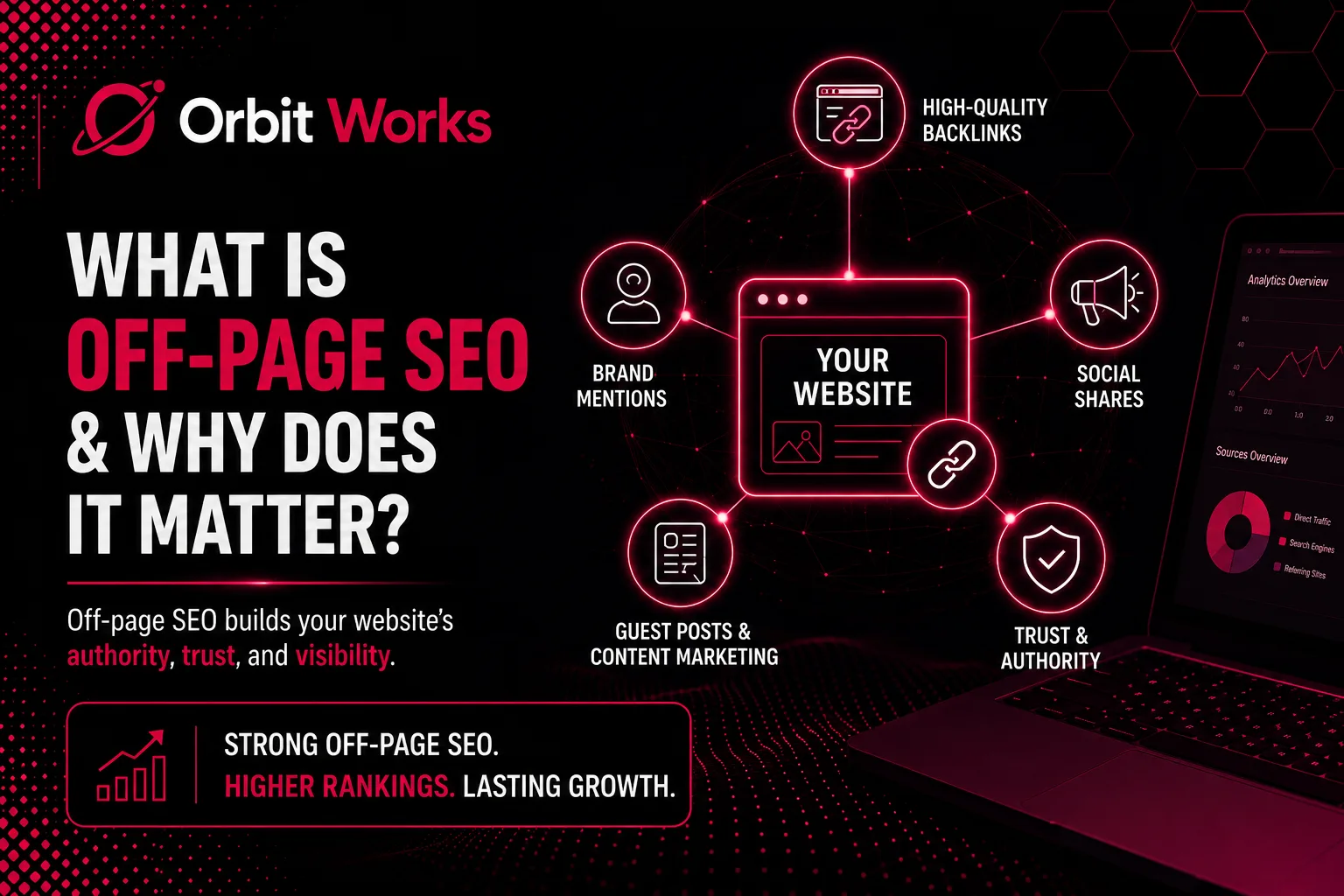
Off-page SEO encompasses all efforts made beyond your website to improve its search engine rankings. On-page SEO focuses on elements inside your site, whereas off-page SEO concentrates on how the broader internet perceives and engages with your content.
So, why does it hold such importance?
Picture it as a popularity vote among websites. When trusted sites link to your pages, mention your brand, or spread your material, search engines like Google interpret these as strong endorsements. Such signals indicate that your site comes across as credible and trustworthy, especially when respected experts point toward you. They also show authority, positioning you as a reliable go-to resource. Moreover, they highlight relevance, proving your information genuinely helps others. The more powerful these positive signals become, the better Google tends to rank your pages. As a result, you gain greater visibility, increased traffic, and stronger business growth over time.
Understanding How Do Search Engines Actually Work gives you a clearer picture of why off-page SEO matters so much. Search engines rely on these external signals to validate your content's quality and relevance.
On-Page SEO vs. Off-Page SEO: What's the Difference?
People frequently mention on-page and off-page SEO together since both play crucial roles in achieving high rankings. However, they address completely separate aspects.
On-Page SEO
On-page SEO covers all optimizations performed directly on your website. Examples include creating strong content, writing effective title tags, crafting meta descriptions, optimizing images, and building smart internal links. You maintain complete control over these factors. Therefore, beginners usually begin their Search engine optimization journey here.
Off-Page SEO
In contrast, off-page SEO involves activities happening away from your site that still affect rankings. The biggest focus remains on acquiring high-quality backlinks from respected external websites. Additionally, it includes social media interactions, brand citations across the web, and customer reviews online. Unlike on-page elements, you possess far less direct influence here because these depend on decisions made by others.
The Two Compared
Think of on-page SEO as keeping your store spotless, neatly arranged, and stocked with excellent items. Meanwhile, off-page SEO resembles receiving glowing recommendations from friends, being featured in newspapers, and enthusiastic praise from satisfied visitors. Although the approaches differ, both remain absolutely necessary for lasting business success.
When you're exploring what is digital marketing, you'll quickly realize that mastering both on-page and off-page SEO is essential for any comprehensive strategy.
Backlinks: The Cornerstone of Off-Page SEO
Whenever off-page SEO comes up, backlinks almost always take center stage, and rightly so. They represent the strongest indicator of authority within Google's ranking system.
What Is a Backlink?
A backlink occurs when one website places a hyperlink pointing to a different site. Simply put, if Site A connects to Site B, Site B receives a backlink.
Why Are Backlinks So Important?
Search engines view backlinks as endorsements or votes of approval. When numerous trustworthy and related sites link to your material, Google recognizes your content as valuable, dependable, and influential. Consequently, accumulating more of these quality endorsements makes your website appear increasingly significant, often resulting in improved positions on search engine results pages.
Quality Over Quantity
Not every link carries the same weight. One connection from a highly regarded source, such as a prominent publication or respected organization, outweighs many links from questionable or low-value pages. Therefore, prioritize earning links from authoritative and topic-relevant domains.
Dofollow vs. Nofollow
The most beneficial backlinks are dofollow links because they transfer SEO value, often called link juice, directly to your site. On the other hand, nofollow links, common in social platforms or forum posts, instruct Google to withhold that value. Although nofollow links still drive awareness and potential visitors, dofollow links remain the primary target for building true ranking power.
Key Off-Page SEO Techniques for Beginners
Here are practical methods to begin strengthening your site's authority through off-page SEO. Importantly, these strategies emphasize genuine credibility rather than shortcuts.
1. Content Promotion & Outreach
Exceptional content rarely gains attention on its own. Even outstanding pieces usually require promotion to reach the right audience. Consider it a gentle nudge to help others discover your helpful resource.
This approach succeeds because it puts your work in front of journalists, bloggers, and specialists who may naturally reference or share it. Such organic links arise from real appreciation of your material. In my own experience, a single well-placed social media mention has occasionally led bloggers to find and cite my work weeks later. Small efforts truly plant seeds for future rewards.
Start simply by sharing new posts across your social channels multiple times with fresh perspectives. Next, send friendly emails to your contacts, subscribers, or colleagues highlighting the resource. Finally, reach out thoughtfully to relevant websites. When your in-depth article naturally complements another site's post, offer it politely as a useful addition for their readers. Always prioritize value over requests, and meaningful relationships often follow.
2. Guest Blogging (A Strategic Approach)
Guest blogging means contributing an article to another site within your field. Although a traditional tactic, it delivers results only when approached carefully.
This method proves effective because it secures a solid backlink, typically in your bio or article body, while introducing your expertise to a fresh, targeted audience. For instance, early in one project I authored a guest piece for a larger industry blog. That one link generated referral visits and noticeably lifted the client's overall site authority, helping their own content climb higher in rankings.
To succeed, identify suitable blogs that welcome guest contributions and hold reasonable authority, ideal for newcomers. Then, propose original, high-value ideas tailored to their readers after studying their existing posts. Finally, deliver top-tier writing that matches or exceeds your usual standards. Quality work enhances your reputation and leaves a positive impression on the host site.
3. Broken Link Building (A Helpful Tactic)
This smart approach lets you deliver real value to another site while gaining a link in return. Many people overlook this advanced tactic, yet beginners can use it easily.
It works because both Google and visitors dislike broken links. Those links create frustration and lead to dead ends. By fixing the issue, you become helpful and increase your chances of earning a backlink.
The process is straightforward. First, locate a broken link on a site related to your niche. Next, suggest your own content as a strong replacement. You are basically helping them improve their page, so they feel grateful.
This method performs best when your article matches the broken resource closely. Avoid sending random suggestions. Relevance matters most.
To succeed, target reputable pages first. Look for industry guides, curated lists, or timeless content that often collects broken links over time. Install a free browser extension such as "Check My Links" or a similar broken link checker. Visit the pages and scan them quickly. The tool flags any dead links instantly. When you spot one and your content fits perfectly, reach out politely. Tell the owner or editor about the broken link. Then recommend your fresh, high-quality guide as a natural update. Phrase it helpfully: "I saw a broken link on your 'Best X Resources' page. My recent in-depth guide on [Your Topic] could work well as a replacement."
4. Directory & Citation Submissions (Foundational for Local SEO)
These steps remain simple yet essential. They matter greatly for businesses that have a physical address or serve a local area.
Citations mean listing your business details, Name, Address, and phone number (NAP), on online directories. Examples include Yelp, Yellow Pages, and niche-specific sites.
They build a strong foundation. You gain reliable backlinks and consistent brand signals across the internet. For local companies, citations help Google trust your business. That trust pushes you higher in Local Pack results, the map section that appears during nearby searches.
5. Social Media Presence & Engagement
Most social links carry a "nofollow" tag, so they pass limited direct SEO value. Still, an active presence delivers important off-page SEO benefits.
It boosts brand exposure and brings real visitors straight to your site. Greater visibility encourages more people to discover your content. Over time, that leads to natural shares, mentions, and extra traffic.
Focus your efforts wisely. Research where your audience spends time online. Then concentrate on those platforms. Share useful posts, join relevant conversations, and grow a loyal community around your brand.
Keep an eye on brand mentions too. Set up free alerts through Google Alerts. When your name or site appears, respond quickly. A thank-you message builds goodwill and sometimes turns into a link.
Connect with influencers in your field. Follow key voices and thought leaders. Share their posts thoughtfully, add meaningful comments, and join discussions. These small actions help your brand get noticed. Later, they may lead to shout-outs or partnerships.
6. Online Reviews (Especially for Local Businesses)
Reviews shape how people view your business. Positive feedback builds confidence, while negative comments push customers away.
Encouraging good reviews matters a lot. At the same time, handle unhappy customers carefully before they post publicly.
Positive reviews lift local rankings. Platforms like Google My Business and Yelp influence Google's trust signals. They show satisfaction, reliability, and real customer approval. For service-based local businesses, steady five-star reviews act like powerful fuel.
Make it simple for satisfied customers to review you. Send direct links in follow-up emails, add them to your website, or use QR codes at your location. Point them to Google My Business, Yelp, or relevant industry pages.
Reply to every review. Positive ones deserve a quick "Thank you!" Negative ones need calm, professional responses. Offer to fix issues privately. Google notices businesses that stay engaged and responsive.
Display great reviews on your own site. Feature testimonials or star ratings on the homepage or a special reviews section. This adds trust and keeps content fresh for visitors.
Things to Avoid: Off-Page SEO Bad Practices
Good methods earn trust and links. Bad ones damage your rankings instead.
Stay away from these risky black hat tactics. Google spots them and often punishes sites harshly.
Never buy links. Paying purely for SEO juice breaks Google's rules and invites penalties.
Avoid stuffing comment sections with spammy links. Irrelevant, keyword-heavy comments in blogs or forums look desperate and hurt your reputation.
Skip link schemes and link farms. Networks built only to exchange links get detected fast. They usually trigger manual actions.
Don't overuse exact-match anchor text. Repeating the same keyword every time feels unnatural. Mix in brand names, raw URLs, generic terms, and related phrases for variety.
Always choose quality over quantity. A handful of strong, relevant links from trusted sites beats hundreds of weak, low-value ones. Focus on value first.
Measuring Off-Page SEO Success (Basics)
Off-page SEO does not deliver quick results. Progress appears gradually. However, you can monitor advancement through several key metrics.
Start with your backlink profile. Tools such as Google Search Console (completely free) or paid platforms like LowFruits reporting, Ahrefs, and Semrush help track newly gained links. Additionally, observe the count of unique referring domains and the overall quality of those connections. Therefore, watch for a steady rise in high-quality domains over time.
Next, examine organic traffic. Review Google Analytics regularly. Consequently, if search engine visitors continue to grow, this serves as strong evidence that your efforts are paying off.
Furthermore, consider Domain Authority (DA) and Page Authority (PA). These scores reflect your site's general strength. Although Google does not use them directly, they still offer a useful snapshot. As link-building continues, you will typically notice these numbers improve gradually.
Finally, track keyword rankings closely. Focus on your main target terms. Are their positions moving higher in search results? Indeed, this remains the primary sign of success and often mirrors your increasing site authority.
Understanding current keyword research trends helps you identify which terms to target with your off-page SEO efforts. Aligning your link-building with the right keywords amplifies your results significantly.
Why Off-Page SEO Matters for Your Overall Strategy
Off-page SEO forms an essential part of any comprehensive digital marketing plan. It works hand-in-hand with your on-page efforts to create a complete optimization strategy.
Think about it this way. You can have the most incredible content in the world, but if nobody knows about it, what's the point? Off-page SEO bridges that gap by building awareness, authority, and trust across the web.
The rise of AI in digital marketing has made link evaluation more sophisticated than ever. Google's algorithms now analyze the context and quality of backlinks with incredible precision. This means genuine, earned links matter more than ever before.
When you build a strong topic cluster strategy around your core subjects, you naturally attract more relevant backlinks. Each piece of content within the cluster reinforces the authority of your pillar pages, making them even more attractive for external linking.
Conclusion
Off-page SEO focuses on establishing trust and credibility outside your own website.
By developing a solid reputation across the internet, you clearly demonstrate to Google that your content holds real value in the online space.
Ultimately, this beginner's guide to off-page SEO highlights one important truth. It is a long-term journey, not a rapid race. Steady effort makes the biggest difference.
When you pair solid on-page optimization with a strong off-page approach, the results become truly powerful. This combination drives increased traffic and connects you with more potential customers over time.
If you're ready to take your off-page SEO to the next level, consider partnering with professionals who specialize in this area. Professional SEO services in usa can provide the expertise and resources needed to accelerate your results.
Remember, off-page SEO is about building genuine relationships and earning trust. Focus on providing value, and the links, and rankings, will follow.
Frequently Asked Questions (FAQs)
1. What is off-page SEO in simple terms?
Off-page SEO refers to all actions taken outside your own website to improve its search engine rankings. This includes building backlinks, social media engagement, and online reviews, anything that signals to Google that your site is trustworthy and authoritative.
2. Why does off-page SEO matter more than on-page SEO?
Both matter equally, but they serve different purposes. While on-page SEO proves you have quality content, off-page SEO proves that others trust and value that content. Think of on-page as your resume and off-page as your references, you need both to get the job.
3. How do search engines actually work with off-page SEO?
How Do Search Engines Actually Work involves crawling, indexing, and ranking. Off-page SEO influences the ranking stage by providing external signals, especially backlinks, that help search engines determine which pages deserve top positions.
4. What are the best off-page SEO techniques for beginners?
Start with content promotion, guest blogging, broken link building, directory submissions, and encouraging online reviews. These foundational off-page SEO techniques build authority gradually without risking penalties.
5. How long does it take to see off-page SEO results?
Off-page SEO is a long-term strategy. You might start seeing movement in 3 to 6 months, but significant results typically take 6 to 12 months of consistent effort. Patience and persistence are key.
6. Can I do off-page SEO without backlinks?
Backlinks are the core of off-page SEO, but you can supplement them with social media presence, brand mentions, and customer reviews. However, for significant ranking improvements, earning quality backlinks remains essential.
7. What's the difference between white hat and black hat off-page SEO?
White hat off-page SEO uses ethical techniques like earning links through quality content and outreach. Black hat methods include buying links, using link farms, or spamming comments. White hat builds sustainable authority; black hat risks penalties.
8. How do I check my off-page SEO performance?
Use tools like Google Search Console, Ahrefs, or Semrush to track your backlink profile, referring domains, and organic traffic growth. Monitoring keyword rankings also helps measure the impact of your off-page SEO efforts.
Final Thoughts
Off-page SEO isn't just about chasing links. It's about building a reputation that earns trust naturally. Focus on creating content worth linking to, building genuine relationships in your industry, and consistently delivering value to your audience.
If managing all of this feels overwhelming, remember that professional digital marketing services in usa can handle the heavy lifting. They bring experience, tools, and strategies that accelerate your off-page SEO success while you focus on running your business.
Your journey with off-page SEO starts today. Pick one technique from this guide and implement it this week. Small, consistent actions compound into significant results over time.