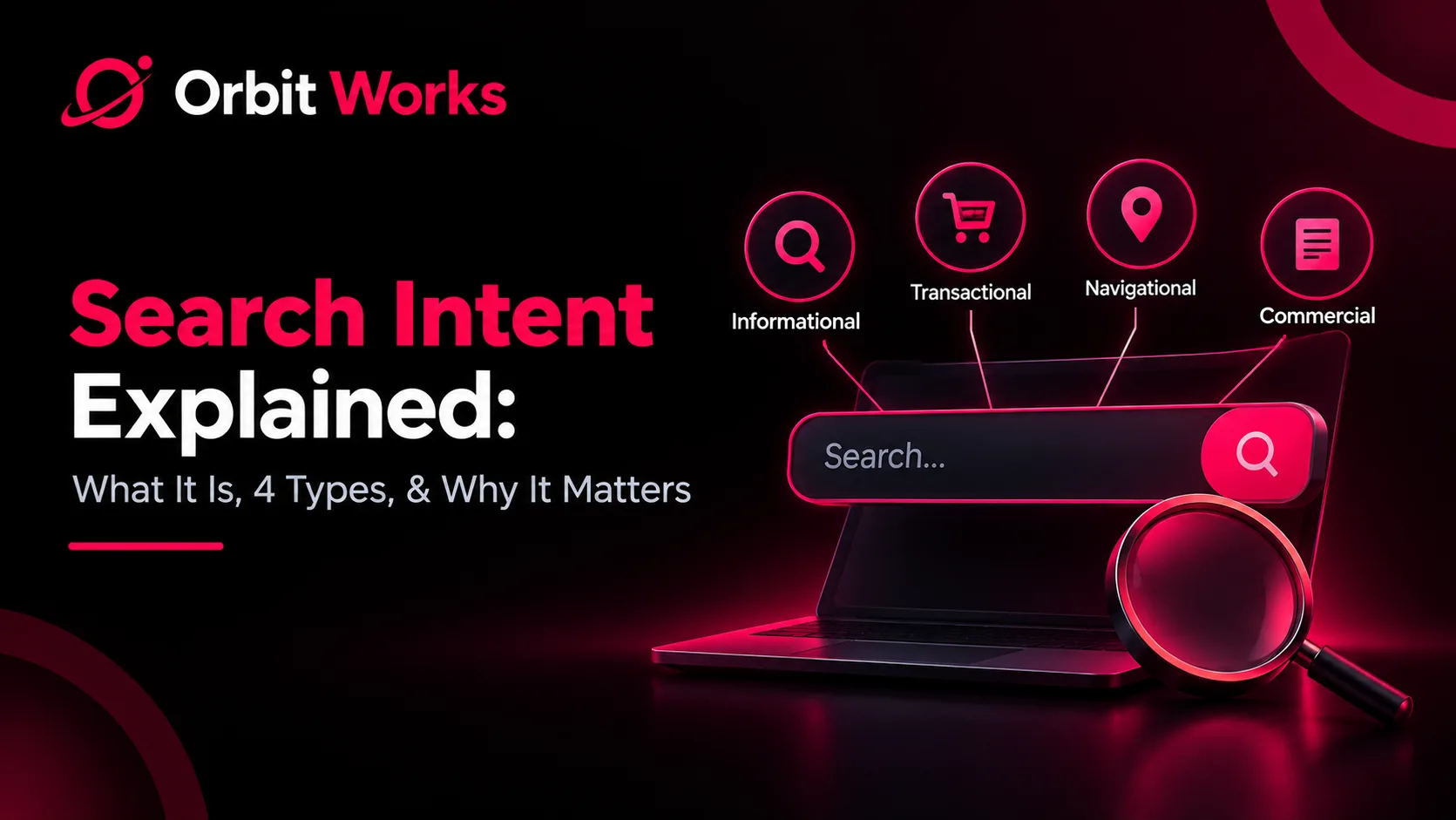
Search Intent Explained: What It Is, 4 Types, & Why It Matters
Search intent is the underlying reason behind every online search. Understanding the 4 types of search intent helps you create content that ranks higher and converts better.
What Is Search Intent?
Let me start with something that changed the way I approach SEO forever. Search intent, also known as user intent, is the underlying reason behind a user's online search. It represents their goal or purpose for performing the search. It is the why behind the query.
Search intent goes beyond the literal interpretation of keywords and focuses on what the user actually wants to accomplish. This distinction is crucial because search engines have become incredibly sophisticated at understanding user intent. They do not just match keywords anymore. They match the meaning.
Let me give you a simple example. If a user searches "best hiking boots" in Google, they are likely wanting to purchase a pair of high-quality hiking boots. They are not looking for a history lesson on footwear. If they search for "how to win at chess," their intent is to improve a skill. They want actionable advice, not a product page.
Understanding search intent allows you to create content that truly resonates with your audience. It provides insights into what the user is actually searching for, allowing you to tailor your content to their needs and expectations. This is the foundation of effective search intent SEO.
Understanding what is digital marketing helps put this into context. Search intent is one of the fundamental concepts that separates successful digital marketing from mediocre efforts. When you understand How Do Search Engines Actually Work, you realize that search engines are essentially intent-matching machines.
The 4 Types of Search Intent
There are four main types of search intent. Each type represents a different user goal, and each requires a different content approach. Let me walk you through each one.
1. Informational Intent
Keywords with informational intent represent users who are seeking knowledge or answers. They are looking to learn something new, understand a concept, or solve a problem. These users are at the beginning of their journey.
Some examples of informational queries include "how to change a tire," "what is climate change," and "best restaurants in new york city." Notice how these queries are questions or requests for knowledge. The user is not ready to buy. They are ready to learn.
Informational keywords tend to perform well in Google featured snippets, which appear at the top of search results. That is because they can often be addressed with quick, straightforward answers. When you optimize for informational keywords, you position your content to capture these valuable SERP features.
Search engines are also sophisticated enough to recognize when a query is better served by a different type of content, such as videos. In some cases, Google will show a YouTube video because watching someone perform a task is easier than reading about it. This is search intent in action.
For informational intent, the best content types include blog posts that provide in-depth explanations, tips, and advice. How-to guides that offer step-by-step instructions work exceptionally well. FAQs that address common questions and concerns are also valuable. Infographics that use visuals to summarize key points can capture attention. Videos that create tutorials or explainer content to visually demonstrate concepts are increasingly important.
2. Navigational Intent
Keywords with navigational intent represent users who have a specific destination in mind. They are looking for a particular website, brand, or product. These users know where they want to go. They just need help getting there.
Some examples of navigational queries include "amazon," "nike website," and "twitter login." Notice how these queries are branded. The user is not looking for information about Amazon. They want to go to Amazon.
Navigational queries are often branded. They help users find your brand or product easily. When someone searches for your brand name, they are expressing navigational intent. This is why brand building and SEO go hand in hand.
For navigational intent, the best content types include a homepage that clearly states your website's purpose and what users can expect to find. Landing pages that are dedicated to specific campaigns or promotions can capture leads and drive conversions. Product listing pages that display a list of products with relevant information are essential for e-commerce. Product detail pages that provide detailed information about individual products help users make informed decisions.
3. Commercial Intent
Keywords with commercial intent represent users who are exploring products or services but may not be ready to buy immediately. They are gathering information and comparing options. These users are in the research phase. They are close to a decision but not quite there yet.
Some examples of commercial queries include "best laptops for students," "compare car insurance rates," and "find a local gym." Notice how these queries contain modifiers like "best," "versus," or "compare." Users are looking to learn more about their options before making a purchase.
Commercial keywords often contain modifiers like "best," "versus," or "compare." Comparisons lend themselves well to this type of user intent because users are trying to decide between options. When someone searches for "Samsung Galaxy vs iPhone 15," they are expressing commercial intent. They want to see a comparison to help them decide.
For commercial intent, the best content types include comparison guides that help users compare different options side-by-side. Reviews and testimonials that showcase positive feedback from satisfied customers are powerful. Free trials or demos that allow users to experience your product or service before making a purchase can be effective. Targeted ads that reach potential customers who are actively searching for your products or services are valuable. Limited-time offers or discounts that create a sense of urgency and encourage purchases work well.
4. Transactional Intent
Keywords with transactional intent represent users who are ready to make a purchase or take a specific action. They have a clear goal and are looking for the best way to achieve it. These users are ready to convert.
Some examples of transactional queries include "buy iphone 15," "book a hotel room," and "order pizza delivery." Notice how these queries contain action words like "buy," "book," or "order." The user is not researching anymore. They are ready to act.
Transactional keywords often perform well in local search results, especially when users include the phrase "near me" or specify a location. That is because they represent users who are looking for businesses or services near their location. These are buyer intent keywords, which means users are ready to purchase.
Transactional keywords are also prime opportunities for maximizing online conversions. They represent the bottom of the funnel. When someone searches for "chai powder" and sees a mix of sponsored ads and organic results, they can convert on the landing pages for any of these results. This is why transactional intent keywords are so valuable.
For transactional intent, the best content types include product detail pages that provide detailed information about individual products, including features, benefits, customer reviews, and specifications. Product listing pages that display a list of products with relevant information such as images, prices, and descriptions are also essential.
Why Is Search Intent Important for SEO?
Now that you know the ins and outs of search intent, let me explain why it matters so much. Understanding search intent is crucial for search intent SEO because it helps you create relevant content that actually ranks.
First, search intent helps you create relevant content. By aligning your content with user intent, you can tailor your content according to the needs of the user. This strategy helps you create better content that can rank higher in search results. When your content matches search intent, search engines recognize it as valuable.
Second, search intent improves the user experience. When your content meets the user's needs, they are more likely to stay on your website longer and return for more. This can lead to higher engagement metrics and send positive signals to search engines about the quality of your content. A strong internal linking strategy also keeps users engaged by guiding them to related content.
Third, search intent boosts keyword rankings. Search engines prioritize websites that provide valuable and relevant content. By understanding search intent, you can optimize your content to meet the needs of your target audience and improve your search engine rankings. This is the essence of search intent in SEO.
Fourth, search intent drives conversions. If your content aligns with the user's intent, they are more likely to take the desired action, such as making a purchase or signing up for a newsletter. This can lead to increased conversions and revenue. Understanding What Are SEO KPIs helps you measure whether your search intent optimization is working.
Fifth, search intent reduces bounce rate. When users find what they are looking for, they are less likely to bounce back to the search results page. A lower bounce rate can signal to search engines that your content is relevant and valuable.
The rise of AI in digital marketing has made understanding search intent even more important. AI-powered tools can analyze search intent at scale, helping you optimize your content optimization efforts more efficiently.
How to Determine Search Intent for Free
Search intent is hidden in plain sight. You just need to know where to look. The answer lies in search engine results pages, also known as SERPs. Let me show you how to perform a search intent analysis without spending a dime.
1. Perform a Google Keyword Search
Start by entering the keyword you would like to investigate in Google Search. This is your starting point. The SERP analysis begins with a simple search query.
2. Analyze the SERP
Now, you are going to do a SERP analysis. A SERP analysis is a study of the search engine results pages for a specific keyword or keyphrase. It involves examining the ranking content to understand what makes them successful.
These insights inform your own content strategy, allowing you to compete and potentially outrank other search results. It also gives you clues about the search intent.
When analyzing the SERP, look out for the following indications of search intent. First, pay attention to keyword modifiers. Certain words can indicate specific user intent. For example, "best," "vs," and "review" signal commercial intent. Words like "buy," "discount," and "order" show transactional intent. For navigational queries, remember to look for branded keywords. Informational intent will have words like "how to," "tutorial," and "guide."
Second, examine headlines and meta descriptions. What information is highlighted in these elements? SEO titles can provide several clues about search intent and the type of content Google serves for your keyword.
Third, look at the content format. What type of content is currently ranking? Are the results primarily blog posts, product pages, or videos? Investigate these pages thoroughly to match them to the different types of search intent we discussed earlier.
Fourth, check for SERP features. Are there any SERP features for your keyword search? Some examples include featured snippets, videos, and product reviews. The type of SERP feature shown can tell you more about the user intent behind a keyword.
3. Assess Competitor Content
At this stage, you should analyze your competitors' content more extensively. Visit the ranking pages and see how they are addressing search intent. This is a crucial part of competitor analysis.
Ask yourself what type of content they are creating. Are they producing blog posts, videos, infographics, or other formats? How in-depth is their content? Do they provide comprehensive information or just a brief overview? How is their content structured? Is it well-organized and easy to navigate? What keywords are they targeting? Are they using similar or different keywords than you? How are they using images and other visuals? What is their call to action?
By analyzing your competitors' content, you can identify areas where you can improve your own content and gain a competitive edge. This is search intent analysis in practice.
When you understand How Do Search Engines Actually Work, you realize that search intent is the bridge between what users want and what search engines deliver. Mastering this concept is essential for search intent SEO success.
How Search Intent Connects to Your Broader Digital Strategy
Search intent does not exist in a vacuum. It connects to every aspect of your digital presence. Let me explain how.
When you are planning custom web development projects, understanding search intent helps you design user journeys that match what visitors actually want. A website built with search intent in mind will guide users naturally toward conversion.
For mobile app development projects, search intent helps you understand what users are looking for on mobile devices versus desktop. Mobile search intent often differs from desktop, and your app should reflect that.
When evaluating Custom Website vs Template Website or Website builders vs custom development, consider how each option supports your ability to optimize for search intent. Custom solutions typically offer more flexibility for creating intent-aligned user experiences.
Content optimization and content optimization tools become more effective when guided by search intent. Instead of guessing what keywords to target, you understand why users are searching and what they need to find.
Building a topic cluster strategy requires understanding search intent. Each piece of content in your cluster should serve a specific intent, guiding users through their journey from awareness to conversion.
Staying current with keyword research trends helps you identify emerging search intent patterns. As user behavior evolves, so does search intent.
Off page SEO and on page strategy both benefit from search intent understanding. When you know what users want, you can create content that attracts links naturally and optimizes for the right keywords.
For businesses working with IT Staff Augmentation in USA providers, understanding search intent helps you communicate the value of your services. When evaluating Staff Augmentation vs Managed Services or considering Traditional Hiring vs. Staff Augmentation, you can create content that addresses the specific search intent of decision-makers.
Best AI SEO Tools can help you analyze search intent at scale, identifying patterns and opportunities you might miss manually. These tools leverage AI in digital marketing to make search intent analysis more efficient.
If you need expert help with search intent SEO, consider working with digital marketing services in the USA or an AI automation company USA that understands how to align content with user intent.
Search Intent FAQs
What is user intent?
User intent is the reason why a user searches for a particular term. It is the goal or purpose behind their query. You may also see user intent as search intent or keyword intent. All these terms are synonymous. Understanding user intent is the foundation of effective search intent SEO.
What are the different types of search intent?
There are four different types of search intent: informational intent, navigational intent, commercial intent, and transactional intent. Each type represents a different user goal and requires a different content approach. Understanding these types of search intent helps you create content that matches what users actually want.
How do I find the search intent of a keyword?
You can find the search intent of a keyword by performing a SERP analysis. This involves entering a keyword into a search engine and analyzing the ranking content. Look for keyword modifiers, examine SEO titles and meta descriptions, check the content format, and identify SERP features. This search intent analysis reveals what users are looking for.
Why is search intent important for SEO?
Search intent is important for SEO because it helps you create relevant content that ranks higher, improves user experience, boosts keyword rankings, drives conversions, and reduces bounce rate. When your content aligns with search intent, search engines recognize it as valuable and reward it with higher positions. This is why search intent in SEO is so critical.
How do I use search intent for SEO?
To use search intent for SEO, start by identifying the search intent behind your target keywords. Then, create content that matches that intent. If the intent is informational, create a how-to guide or blog post. If the intent is commercial, create a comparison guide or review. If the intent is transactional, optimize your product pages. This search intent SEO approach ensures your content meets user needs.
What are high-intent keywords?
High-intent keywords are keywords that indicate a user is close to making a purchase or taking a specific action. These are often transactional keywords or commercial keywords. Buyer intent keywords like "buy," "order," or "discount" signal that users are ready to convert. Targeting high-intent keywords can lead to higher conversion rates.
How do I analyze competitor content for search intent?
To analyze competitor content for search intent, visit the pages ranking for your target keyword. Examine what type of content they are creating, how in-depth it is, how it is structured, what keywords they are targeting, and how they are using visuals. This competitor analysis reveals what search intent Google is rewarding for that keyword.
Final Thoughts
Understanding search intent is essential for creating content that performs well with users and search engines. By aligning your content with the user's intent, you can improve search engine rankings, drive more traffic to your site, increase conversions for your business, and enhance the user experience.
The four types of search intent—informational intent, navigational intent, commercial intent, and transactional intent—each require a different approach. When you master search intent, you stop guessing what content to create and start creating content that actually works.
Plus, it is not hard to decipher once you understand the different types of search intent. A simple SERP analysis can reveal what users are looking for. And with the right content optimization tools, you can create content that meets those needs.
The future of search engine optimization is intent-driven. Search engines are getting smarter. They understand context, meaning, and purpose. Search intent is no longer optional. It is essential.
Whether you are working on content optimization, building a topic cluster, or developing a custom web development project, search intent should guide every decision. When you understand why users search, you can create content that truly resonates.
Search intent is the key to unlocking SEO success. Master it, and you will see your rankings, traffic, and conversions improve. Ignore it, and you will struggle to compete in an increasingly sophisticated search landscape.